An error has occurred during checkout. We are sorry for the inconvenience. Please contact RDO Equipment Co. at (701) 401-9744 or RDOAccountHelp@RDOequipment.com.
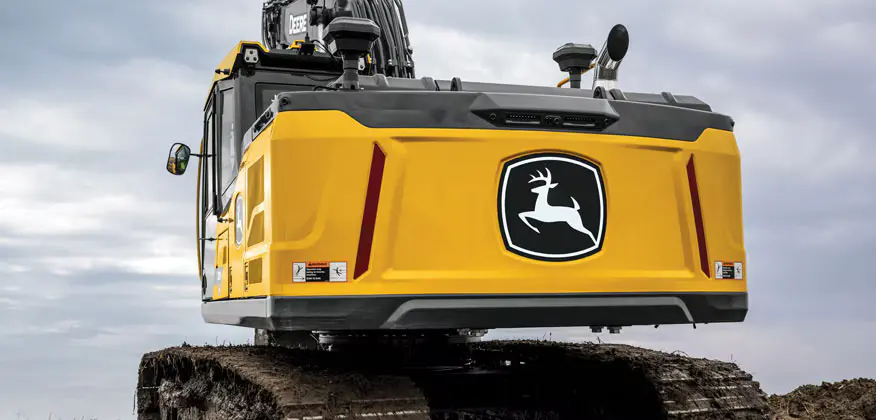
John Deere’s new P-Tier excavators aren’t a typical model year update. The 210, 230 and 260 models were redesigned from the ground up.
Tested on active job sites and shaped by feedback from operators, the P-Tier excavators were refined before production, resulting in machines that feel more dialed in from day one.
Here’s what’s new with John Deere’s P-Tier excavators and what it means for your operation.
What Is P-Tier?
P-Tier represents the next generation of John Deere excavators, built around a few key priorities:
Performance: More consistent machine response across applications
Precision: Integrated grade control and improved hydraulic tuning
Technology: Systems that make it easier for operators to learn and use
Rather than building off an existing platform, Deere redesigned these P-Tier excavators to better support modern workflows, where accuracy, efficiency and ease of use all directly impact productivity.
What’s New with John Deere P-Tier Excavators?
1. A Ground-Up Redesign Built on Real Feedback
One of the biggest differences with P-Tier isn’t just a single feature. It’s how the machines were developed.
Built as a new platform, not as an update to a previous model
Tested in real-world conditions before final production
Refined using direct feedback from operators and contractors
During testing, operators could submit feedback directly from the cab, helping fine-tune performance, controls and usability before the machines reached final production.
2. Integrated Technology That Fits the Way You Work
Technology only adds value if it fits into how work actually gets done. With P-Tier excavators, key systems are built into the machine.
2D and 3D grade control are fully integrated into the machine
Operators can switch between tasks without adding extra setup time
The updated display, similar to a tablet, is designed to feel familiar and easy to navigate
For changing site conditions or simpler jobs, features like EZ Control allow operators to adjust quickly without relying on a full 3D model.
3. Smarter Hydraulics for Better Control
Hydraulic performance was another major focus during development. The P-Tier lineup was tuned to improve how the machines respond in real working conditions.
More predictable control during fine movements
Better balance between speed and precision
Consistent performance across different applications
That consistency shows up immediately on the job. Whether digging, lifting or running attachments, operators can make cleaner movements with less rework.
4. Built-In Safety for Busy Job Sites
Many job sites today involve tight spaces, multiple crews and constant movement.
P-Tier excavators include safety features designed with those conditions in mind:
Advanced camera systems for improved visibility
Virtual boundaries like ceiling, floor and swing limits
Geofencing to help control machine movement
Machine avoidance features for added awareness
These tools give operators more tools to manage risk while staying productive.
Watch this video to learn how SmartWeigh™ supports more efficient loading, EZ Control helps simplify machine movement and Virtual Fences can help operators work more confidently in tight or complex jobsites.
5. Designed to Reduce Downtime and Keep Work Moving
P-Tier excavators are designed to minimize interruptions, both in how they’re supported and how they’re used day to day.
Remote diagnostics allow dealers to connect directly to the machine
Issues can often be identified without waiting for an on-site visit
Attachment settings can be stored and quickly selected from the cab
The machine automatically adjusts hydraulic flow and pressure for each tool
Instead of stopping to troubleshoot or reconfigure, crews can keep moving between tasks and address issues faster when they come up.
Why the 230 P-Tier Stands Out
Among the 210, 230 and 260 models, the 230 P-Tier has drawn particular interest.
It hits a practical middle ground. It’s large enough to handle demanding work like basements and utility repairs, but still compact enough to stay productive on tighter job sites.
That balance shows up in day-to-day operations. Crews don’t need to switch machines as often, and operators can move between tasks without losing time to repositioning or reconfiguring.
Get an inside look at the new 230 P-Tier in this episode of The Track:
The Role of Your Dealer Matters
With more technology built into the machine, access to support becomes more important.
Through remote diagnostics and display access, RDO Equipment Co. can connect to your excavator, identify issues and in some cases resolve them without sending a technician to the job site.
That means less waiting, fewer interruptions and more consistent uptime when schedules are tight.
A Different Kind of Excavator Launch
The 210, 230 and 260 P-Tier excavators reflect a shift in how machines are being developed and used on today’s job sites.
With more integrated technology, refined performance and input from real operators, these machines are designed to support the way work actually gets done.
If you’re evaluating where P-Tier excavators fit into your fleet, the best way to understand the difference is to see them in action. Connect with your local RDO Equipment Co. to learn more or schedule a demo.
Scott Weness
Scott Weness, an experienced heavy equipment sales professional, partners with contractors across Minnesota and North Dakota. He works with RDO team members to provide training, expert service and actionable advice to customers. In his free time, he spends time with his family and kids in the Twin Cities area.