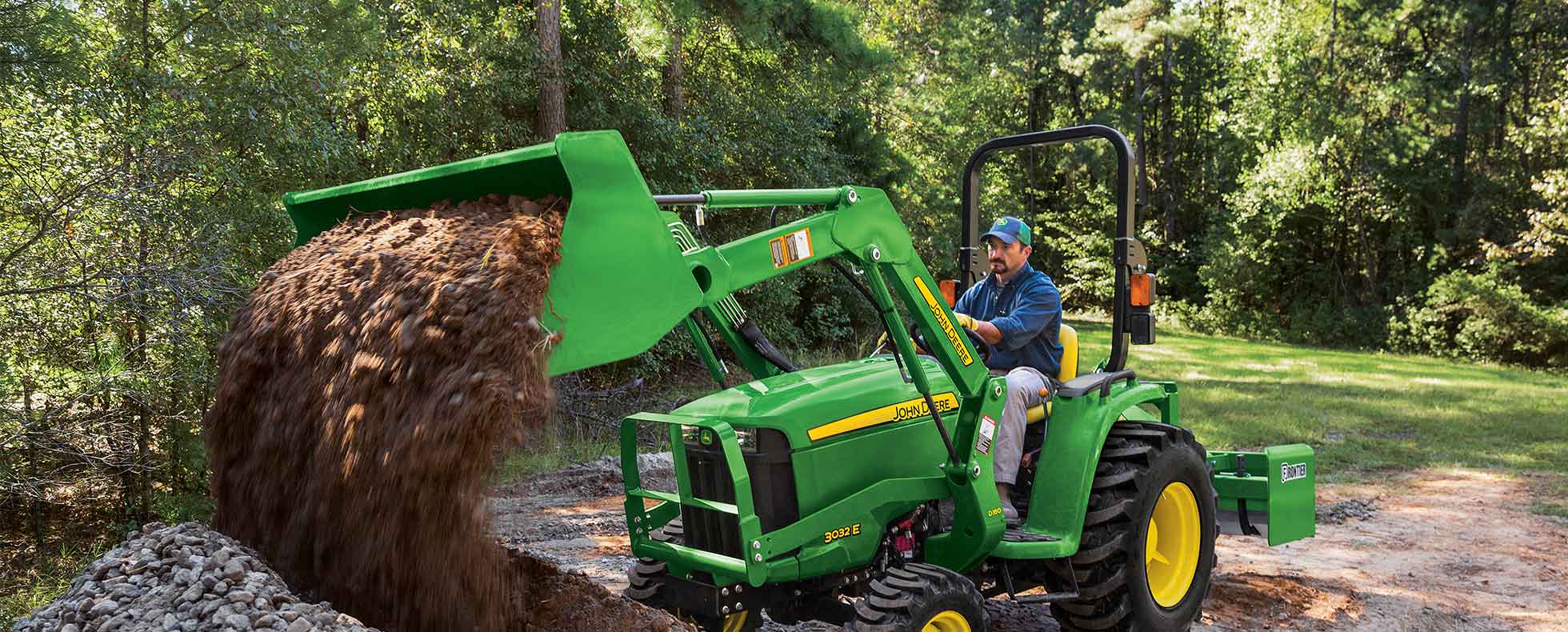
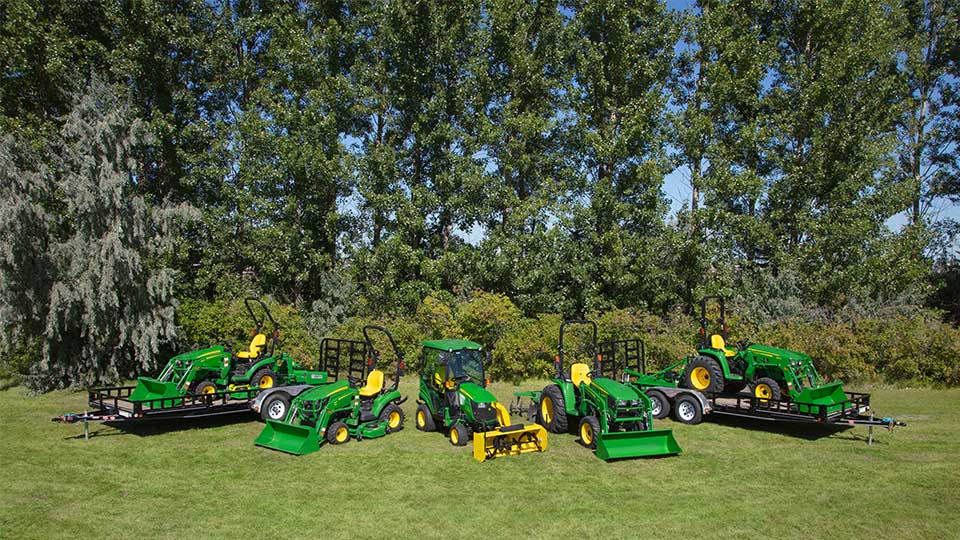
If you’re shopping for a John Deere Compact Utility Tractor (CUT), you’ll probably land in one of two places: the E or M CUTs. At a glance, many of these tractors can look close on paper. In the field, they fit different jobs. The E models in this comparison focus on value, simplicity and day-to-day property work. The 4M models step up with more horsepower, heavier-duty specs and more headroom for loader work, snow removal, hay and higher-hour use.
The right tractor needs to match your land, your implements and how often you put it to work. If you mow, move material, grade driveways or handle routine chores, an E model may cover your needs. If you push harder, run bigger attachments or need more year-round utility, a 4M may make more sense.
What’s the Difference Between John Deere’s E and M Compact Tractors?
The 3E models in this lineup offer capabilities at a lower price point. They fit owners who want a machine that handles routine work without adding features they may never use. In the 3E CUT lineup, that usually means a straightforward tractor built around rear-mounted implement work, while the 3025E stands out as a CUT option for mowing and light chores around tighter properties.
The 4M lineup takes a step up in size and capability. John Deere builds the 4044M, 4052M and 4066M on the same 4M platform, so the biggest difference between them comes down to power. All three share the same wheelbase, Category 1 hitch and 2,500-pound hitch lift capacity. As you move up the line, you gain more horsepower and more PTO performance for tougher, higher-hour jobs.
Ready to find yours? Take this Compact Utility Tractor Fit Assessment.
John Deere E and M Models’ Quick Comparison
Model | Series | Gross Horsepower | Best Fit |
3025E | 3E Series | 24.4 horsepower | Property maintenance, loader work, grading or light implement use |
3038E | 3E Series | 36.7 horsepower | Greater Power Take-Off (PTO) horsepower for heavier chores and larger properties |
4044M | 4M Series | 43.1 horsepower | Heavier utility work on commercial grounds |
4052M | 4M Series | 51.5 horsepower | Greater PTO horsepower for mowing, loader tasks or snow removal tasks |
4066M | 4M Series | 65.9 horsepower | Best for high-production hours, paired with high lifting capacity |
1023E vs. 3025E
When comparing these two models, start with your property size and lift needs. The 1023E gives you a smaller frame, 21.5 horsepower and a sub-compact footprint that works well for mowing, landscaping and light chores. The 3025E moves you into a heavier frame with 24.4 horsepower, more hydraulic flow and a much stronger rear hitch. If you need more loader and lift power, the 3025E is the clear step up.
3025E vs. 3038E
When comparing these two models, consider which implements you may need. The 3025E works well for loader tasks, mowing and lighter acreage maintenance. The 3038E adds more horsepower, which helps when you run larger rotary cutters, tillers or other power-hungry implements.
4044M vs. 4052M vs. 4066M
These 4M tractors stay very close in size, hydraulics and hitch specs. The real choice comes down to how much power you need. The 4044M covers a lot of utility and acreage work without a large increase in budget. The 4052M has more PTO power for snowblowers, mowers and heavier implements. The 4066M brings the most horsepower in the group and fits owners who run tougher attachments, work more acres or want the most room to grow.
Who Should Buy an E Series Compact Utility Tractor?
Choose a 3E model if you want a capable tractor for regular property work and you want to keep the buying decision simple. These tractors fit homeowners, acreage owners and operators who spend more time mowing, moving material, grading, feeding livestock and handling light implement work than running commercial hours. They deliver solid utility without asking you to pay for extra features you may not need.
In this group, the 3025E fits cost-conscious buyers who want a bigger frame and more lift without going all the way into the 4M family. The 3038E makes sense when you want the same 3E value mindset but need more horsepower and more PTO performance.
Who Should Buy a 4M Compact Utility Tractor?
Choose a 4M if your tractor needs to work harder, longer and across more seasons. These models fit small farms, larger acreages, commercial grounds work and operations that rely on heavier PTO implements, frequent loader work or snow removal. They also make sense when you know your tractor will be a higher-hour machine and you want more power in reserve.
The 4044M gives you a strong starting point in the 4M line. The 4052M often hits the sweet spot for owners who want more PTO headroom without making the jump to the top model. The 4066M fits buyers who want maximum power in the same chassis and plan to put that power to work.
Is It Worth Paying More for a 4M?
That depends on your workload. If you use your tractor occasionally for mowing, light material handling and routine property maintenance, an E model may check every box. If you use your tractor weekly, run bigger implements or need more capacity for a loader, PTO or year-round chores, a 4M can make your day easier and help you finish work faster. The key is to buy for the work you do most, not for the rare job you tackle once a year.
How to Choose the Right John Deere Compact Utility Tractor?
Start with the work, not the brochure. Think through the jobs you do every week, the implements you already own and the attachments you may want next. Then match those needs to your tractor’s size, horsepower and PTO demands.
If your work centers on mowing, light landscaping and routine chores in tighter spaces, start with the 1023E. If you need more frame size, lift and day-to-day utility for acreage work, move to the 3025E. If you want more horsepower without leaving the value-focused E lineup, look at the 3038E.
If your work includes heavier loader jobs, larger implements, more snow removal or more commercial-style use, the 4M family deserves your attention. From there, pick the 4044M, 4052M or 4066M based on how much PTO power and growth room you need.
Ready to narrow it down? Take our Compact Utility Tractor Fit Assessment or talk with your local RDO Equipment Co. team. We’ll help you match the right machine to the work in front of you.
Eddie Ruiz Jr.
Eduardo Ruiz, Jr. grew up in the farming industry and is a lifelong resident of the Watsonville/Salinas area. As account manager, he focuses on both consumer products and compact construction equipment sales for both new and used equipment. ‘Eddie’ works out of the Watsonville store but serves as an account manager for the RDO Equipment Co. store in Salinas as well.