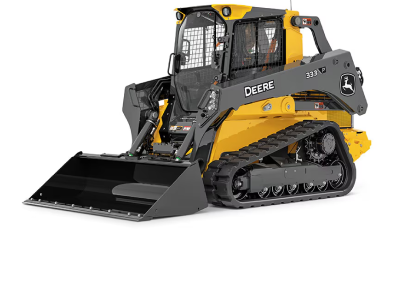
A Compact Track Loader (CTL) can operate a wide range of attachments, but not every attachment is the right fit for every machine or application.
When preparing for winter, contractors commonly consider snow pushers, snow plows, snow blowers, angle blades, V-blades, snow buckets and rotary brooms. Determining which snow attachment fits your compact track loader requires more than checking whether it connects to the machine.
The attachment’s width, weight, hydraulic requirements and intended application should align with the CTL’s specifications and the property being cleared.
Before selecting a compact track loader snow attachment, ask:
- Does the attachment use the same mounting system as the machine?
- Can the CTL safely lift and operate the attachment?
- Does the attachment require standard-flow or high-flow hydraulics?
- Is the attachment appropriately sized for the machine?
- Will it fit through the property’s gates, drive lanes and confined areas?
- Does it solve the operation’s primary snow removal challenge?
The right attachment can help an operator complete work with fewer passes, clear snow faster and reduce unnecessary machine operating time. An attachment that is too large, too heavy or improperly matched to the machine can limit maneuverability and performance.
Several factors determine whether a snow attachment fits and performs properly on a compact track loader.
Attachment Mounting System
The first consideration is the connection between the attachment and the CTL. Confirm that the attachment’s mounting system is compatible with the machine’s attachment interface.
Physical connection is only the first step. Just because an attachment connects to the machine does not mean the CTL is properly sized or equipped to operate it.
Attachment Weight
The weight of the attachment should be evaluated against the CTL’s operating capacity and lift capabilities. A heavy attachment may affect machine balance, lifting performance and stability.
The weight of the snow or material being carried also matters. This is especially important when using a snow bucket to lift heavy, wet snow.
Hydraulic Requirements
Hydraulically powered attachments, including snow blowers and some configurable plows or brooms, have specific hydraulic flow and pressure requirements.
Confirm whether the attachment requires:
- Standard-flow hydraulics
- High-flow hydraulics
- A specific pressure range
- Additional hydraulic connections
- Electrical controls or a control harness
An attachment may connect to the CTL but still deliver poor performance if the machine cannot provide the hydraulic flow it requires.
Attachment Width
The attachment should be wide enough to clear the CTL’s tracks, particularly when angled, but it should not be so wide that it becomes difficult to maneuver or overwhelms the machine.
The property also influences the ideal width. A wide snow pusher can be productive in an open parking lot, while a narrower blade or plow may work better around parked vehicles, curbs and landscaped islands.
Snow Conditions and Application
Finally, match the attachment to the work it needs to perform.
Light accumulations, deep drifts, heavy wet snow and packed material may each require a different solution. The right attachment also depends on whether the operator needs to push, windrow, throw, lift, stack or sweep the snow.
Which Snow Attachment Should You Choose for Your CTL?
Start with the primary snow removal challenge:
- Large, open parking lots: Consider a snow pusher.
- Properties with obstacles or changing layouts: Consider a configurable snow plow.
- Deep snow or limited stacking space: Consider a snow blower.
- Long roads and drive lanes: Consider an angle blade.
- Drifts and changing snow depths: Consider a V-blade.
- Relocating or stacking snow: Consider a snow bucket.
- Light snow and final cleanup: Consider a rotary broom.
Many commercial snow removal operations use more than one attachment. A snow pusher may complete the primary clearing, while a bucket manages growing piles and a rotary broom handles final cleanup.
Snow Pushers: Clear Large, Open Areas
A snow pusher can be a productive compact track loader attachment for large parking lots, equipment yards and other open properties.
Instead of continuously windrowing snow from one side of the site to the other, a pusher contains the snow and carries it toward the edge of the property. This can reduce the number of passes needed to clear an open area.
RDO offers Arctic Snow Pushers for skid steers and compact track loaders, including models built with heavy-duty steel and adjustable trip edges.
A snow pusher may fit the application when an operator needs to:
- Clear a large, open parking lot
- Move a high volume of snow
- Reduce the number of passes
- Maintain productivity during winter storms
When sizing a snow pusher, consider the CTL’s operating capacity, machine width, available traction and the amount of open space on the property. An attachment that is too wide may reduce maneuverability or push more material than the machine can efficiently handle.
Configurable Snow Plows: Adapt to Changing Sites
Not every property provides long, unobstructed pushes. Some sites include parked vehicles, loading areas, drive lanes, curbs and landscaped islands.
A configurable snow plow can give the operator more control over how snow is carried and directed.
RDO carries Metal Pless snow plows, including PlowMaxx models designed for demanding winter applications. Depending on the model and configuration, operators may be able to adjust the plow to match different working areas and snow conditions.
Consider a configurable plow when operators need to:
- Work around vehicles and fixed obstacles
- Clear loading areas and drive lanes
- Direct snow toward multiple collection points
- Adjust to changing conditions during a storm
Before selecting a plow, confirm its mounting, weight, hydraulic and electrical requirements.
Snow Blowers: Move Snow Beyond Existing Piles
Pushing snow works until the property runs out of storage space.
A CTL snow blower collects and discharges snow instead of pushing it across the surface. This can make a blower useful when repeated storms create piles that cannot be pushed any higher or when snow must be moved away from a confined work area.
Snow blowers may fit applications involving:
- Deep snow
- Packed drifts
- Narrow drive lanes
- Limited snow-storage space
- Existing piles that restrict access
- Areas where snow needs to be discharged away from the surface
Hydraulic compatibility is especially important when choosing a snow blower. Review the blower’s flow and pressure requirements and confirm that the CTL can support them.
Also consider where the blower will discharge snow. Buildings, vehicles, pedestrians and neighboring properties may limit where the operator can safely direct it.
Angle Blades: Windrow Snow Along Long Passes
An angle blade directs snow toward one side of a road, drive lane or parking area as the CTL moves forward.
Instead of carrying the snow directly ahead of the machine, the angled blade creates a windrow. This can make it effective for long passes and sites where snow needs to move toward a designated collection point.
Consider an angle blade when the operator needs to:
- Clear long drive lanes or roads
- Direct snow away from entrances
- Work around parking islands
- Move snow toward the edge of a property
The blade should be wide enough to clear the CTL’s tracks when fully angled. Its weight and width should also match the machine’s operating capabilities.
V-Blades: Handle Drifts and Variable Snow Depths
A V-blade gives operators additional flexibility when snow depth and site conditions change.
The V configuration can help the machine break through deeper accumulations and open an initial path after heavy snowfall. The operator may then adjust the blade to direct or carry the snow.
A V-blade may fit operations that regularly encounter:
- Wind-driven drifts
- Deep or uneven accumulation
- Changing snow conditions
- Roads or lanes that need to be opened quickly
Review the attachment’s hydraulic and electrical control requirements before matching a V-blade to a CTL.
Snow Buckets: Scoop, Stack and Load Snow
Pushers and blades are designed primarily to clear surfaces. A snow bucket gives the operator the ability to scoop, lift, carry and stack snow.
This can be especially useful later in the season when accumulated piles begin taking up parking spaces, reducing visibility or limiting where new snow can be placed.
A snow bucket can help crews:
- Relocate existing piles
- Stack snow higher
- Load snow into trucks
- Remove snow from crowded parking lots or streets
- Manage heavy, wet material
Snow buckets are generally designed to carry a greater volume of lighter material than general-purpose buckets. However, the combined weight of the bucket and its contents still needs to remain within the CTL’s operating capabilities.
Rotary Brooms: Remove Light Snow and Residual Material
A rotary broom can remove light snow and sweep away material left behind by a pusher or blade.
For many contractors, a broom is not the primary snow removal attachment. It serves as a finishing tool for paved surfaces, entrances, loading areas and other high-traffic locations.
Consider a rotary broom for:
- Light snow accumulation
- Final cleanup after plowing
- Entrances and pedestrian areas
- Loading zones
- Paved surfaces requiring a cleaner finish
Rotary brooms are hydraulically powered, so confirm the attachment’s flow requirements and connection type before pairing one with a compact track loader.
Does a Skid Steer Attachment Fit a Compact Track Loader?
Many skid steers and compact track loaders use similar attachment interfaces, which can allow certain attachments to work with either machine type.
However, connection alone does not confirm compatibility.
Before using a skid steer attachment on a CTL, check:
- Mounting interface
- Attachment weight
- Hydraulic flow and pressure
- Hose and coupler compatibility
- Electrical connections
- Machine operating capacity
- Attachment width
- Manufacturer requirements
The machine and attachment manuals should provide the specifications needed to evaluate compatibility. An RDO team member can also help confirm whether a specific attachment is suited to a particular machine.
Use Site Mapping to Protect the CTL and Attachment
Selecting a compatible attachment is only part of winter preparation. Operators also need to understand what will be hidden underneath the snow.
Curbs, parking islands, drainage structures, speed bumps and landscaping can become difficult to see after a storm. Hitting one of these features can damage the attachment, machine or property and interrupt the snow removal operation.
Before the first snowfall, map features such as:
- Curbs and parking islands
- Storm drains
- Fire hydrants
- Speed bumps
- Retaining walls
- Landscaping
- Building entrances
- Emergency routes
- Pedestrian areas
Site mapping also gives supervisors an opportunity to establish efficient clearing routes and designated snow-storage areas before a storm begins.
Demonstrate the Attachment Before Winter
Specifications can help determine whether an attachment fits a compact track loader, but a demonstration shows how that combination performs in an actual application.
An attachment demonstration with an RDO team member can help contractors evaluate:
- Machine and attachment compatibility
- Hydraulic performance
- Maneuverability
- Visibility from the cab
- Attachment controls
- Setup requirements
- Operator comfort
- Performance in conditions similar to the intended application
The right compact track loader attachment is the one that fits the machine, works within the property and solves the operator’s primary snow removal challenge.
A snow pusher can move high volumes across an open lot. A configurable plow can adapt to obstacles and changing conditions. A blower can move snow when the property runs out of stacking space. Buckets and brooms can complete relocation and cleanup work after the primary pass.
Contact your local RDO Equipment Co. team to confirm attachment compatibility or schedule a snow removal attachment demonstration.
Scott Weness
Scott Weness, an experienced heavy equipment sales professional, partners with contractors across Minnesota and North Dakota. He works with RDO team members to provide training, expert service and actionable advice to customers. In his free time, he spends time with his family and kids in the Twin Cities area.